The 2030 Agenda was adopted with an ambitious promise: to transform our world by ending poverty, protecting the planet and ensuring peace and prosperity for all. But as the deadline approaches, the world is not on track to achieve the Sustainable Development Goals.
The question is no longer whether progress has been made.
It has.
The more urgent question is: Has progress been fast enough and can the world accelerate sufficiently before 2030?
The answer, according to the latest global assessments, is deeply concerning.
The world is significantly off track
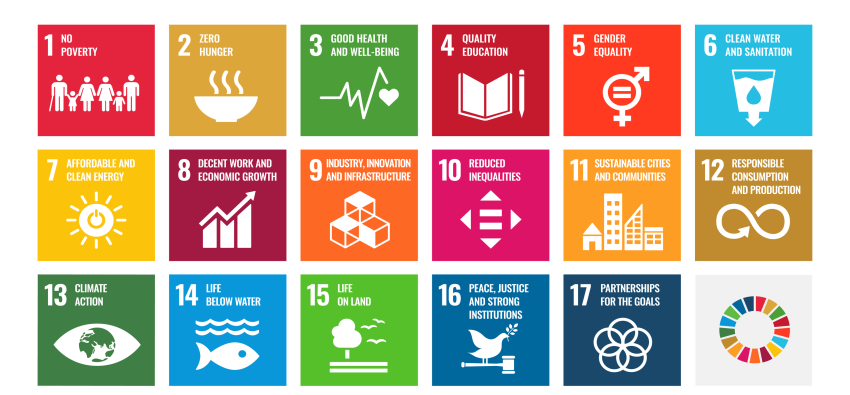
The 17 Sustainable Development Goals were adopted in 2015 as a shared global roadmap towards 2030. They cover some of the world’s most pressing challenges: poverty, hunger, health, education, gender equality, climate change, decent work, peace, inequality and environmental protection.
But the world is now approaching the final years of the 2030 Agenda with a significant gap between ambition and reality.
According to the Sustainable Development Goals Report 2026, of the 139 SDG targets with sufficient trend data, only 36% are on track or showing moderate progress. Nearly half are advancing only marginally or not at all, while 15% have regressed below their 2015 baseline.
This means that the world is not simply moving too slowly.
But the world has achieved more than the headlines suggest
Being off track does not mean the SDGs have failed.
The Goals have helped create a shared global framework for measuring progress. They have influenced national development plans, government policies, international cooperation and the priorities of civil society and the private sector.
There has also been meaningful progress in several areas.
Since 2015, billions of people have gained access to safe drinking water and sanitation, electricity now reaches 92% of the world’s population, and internet access has nearly doubled from 40 to 74%. New HIV infections and AIDS-related deaths have each fallen by roughly one third, 59 countries have eliminated at least one neglected tropical disease, 134 countries have met the child mortality reduction target, and disaster-related deaths have dropped by 65%. Social protection now reaches more than half of humanity for the first time in history. A decade ago, data existed for only half of all SDG indicators; today, a global database of three million data points spans nearly every indicator.
The SDGs have also changed the way development is understood.
Development is no longer seen simply as economic growth.
The 2030 Agenda recognizes that poverty, inequality, climate change, health, education, peace, economic opportunity and environmental sustainability are deeply connected.
That is an important achievement in itself.
The SDGs have given governments, NGOs, donors and communities a common language for discussing development.
But a framework is only as powerful as the action behind it.
And this is where the greatest challenge lies.
The biggest problem: progress is deeply unequal
The global picture hides enormous differences between countries and communities.
While some countries are advancing rapidly, others are being pushed further behind.
The world’s poorest and most vulnerable countries are often facing the greatest combination of challenges:
limited public resources;
high debt burdens;
weak infrastructure;
climate vulnerability;
conflict and instability;
limited access to finance; and
dependence on international assistance.
At the same time, inequality within countries remains a major obstacle.
The benefits of economic growth do not reach everyone equally. Women, children, persons with disabilities, refugees, displaced people, rural communities and other marginalized groups continue to face disproportionate barriers.
This means that global progress can exist alongside local failure.
A country may experience economic growth while poverty increases in certain communities. A city may become more digitally connected while rural populations remain excluded. National education enrolment may improve while children with disabilities or those affected by conflict remain outside the system.
The SDGs cannot be achieved simply by raising national averages.
Progress must reach the people who are furthest behind.
Climate change is making every other SDG harder to achieve
Climate change is not only an environmental issue.
It is increasingly a development issue affecting almost every SDG.
Extreme weather can destroy homes, schools, crops and infrastructure. Drought can increase hunger and poverty. Flooding can disrupt education and healthcare. Climate-related displacement can increase pressure on cities and public services.
This creates a multiplier effect.
A country already struggling with poverty may be pushed further backwards by climate disasters. A community that has recently gained access to healthcare may lose that infrastructure following a flood. Farmers may lose their livelihoods because of drought.
Climate change therefore threatens to reverse progress across the entire 2030 Agenda.
The world cannot achieve the SDGs without addressing the climate crisis.
And it cannot address climate change effectively without addressing inequality and poverty.
Financing is one of the greatest barriers to achieving the SDGs
The scale of the financing challenge is enormous.
Developing countries are facing growing pressure from debt, rising interest payments, climate-related losses and reduced fiscal space. At the same time, international development assistance is under pressure.
The implications are significant.
At the very moment when developing countries need more resources to address poverty, climate change, health, education and inequality, the international financing environment is becoming more difficult.
The challenge is not only that there is less money. The money that is available is also becoming more competitive, more strategic and more demanding.
Donors are increasingly asking:
What measurable change will this funding achieve?
Can the model be scaled?
Is the intervention locally owned?
Is there evidence that it works?
Can the programme survive beyond donor funding?
Does it contribute to wider systemic change?
For NGOs, this represents a fundamental change in the fundraising environment.
The donor landscape is changing
For many years, international NGOs and civil society organisations operated within a relatively familiar funding environment. They identified a donor, developed a proposal, implemented a project and reported on the results.
That model is changing.
Donors are increasingly prioritizing:
locally led development;
climate action and resilience;
gender equality;
humanitarian-development-peace approaches;
systems change;
innovation and technology;
measurable impact;
partnerships with the private sector;
domestic resource mobilization; and
larger, more strategic interventions.
As donor expectations evolve, NGOs are under increasing pressure to demonstrate efficiency, transparency and evidence of impact. Adapting to these expectations can be particularly challenging for smaller organisations. Many NGOs are deeply connected to their communities but lack the resources to invest in sophisticated monitoring systems, research, communications, fundraising capacity and donor intelligence.
This creates an uncomfortable paradox: the organisations closest to the communities they serve may be the least equipped to compete in an increasingly complex funding environment.
How NGOs can adapt
The changing donor environment requires NGOs to rethink how they operate.
The future will not necessarily belong to the organisations with the biggest budgets.
It will increasingly belong to organisations that can clearly demonstrate:
who they serve, what problem they are solving, what changes because of their work and why their approach is relevant to the wider system.
Move beyond project-based thinking
Many NGOs still define themselves by individual projects.
But donors are increasingly interested in the bigger picture.
Rather than asking only:
What activities will we implement?
NGOs should also ask:
What wider problem are we contributing to solving?
A livelihoods project, for example, may contribute to poverty reduction, gender equality, decent work, food security and climate resilience.
An organisation working on health may also contribute to poverty reduction, gender equality and reduced inequalities.
This does not mean forcing every project to claim that it contributes to all 17 SDGs.
It means understanding the connections between development challenges.
The SDGs are interconnected. NGO strategies should be too.
Invest in evidence and learning
In a competitive funding environment, good intentions are no longer enough.
NGOs need to understand and communicate:
what they are achieving;
for whom;
at what cost;
under what conditions; and
with what long-term results.
Evidence does not always require expensive research.
Organisations can begin with:
better baseline data;
beneficiary feedback;
outcome tracking;
case studies;
learning reviews;
gender- and inclusion-disaggregated data; and
systematic documentation of what works and what does not.
The most valuable question is not:
Did we complete our activities?
It is:
What changed because of our work?
Build stronger partnerships
No single organisation can achieve the SDGs alone.
NGOs need to move beyond competition and build meaningful partnerships with:
governments;
communities;
local organisations;
universities;
businesses;
foundations;
other NGOs; and
international institutions.
Partnerships can provide access to expertise, technology, funding and networks.
But genuine partnership requires more than collaboration on paper.
It requires sharing power, knowledge and decision-making.
This is particularly important in the movement towards locally led development.
Local organisations should not be seen only as implementers of projects designed elsewhere.
They have knowledge, relationships and experience that are essential to creating effective and sustainable solutions.
Diversify funding
The traditional dependence on one or two international donors is increasingly risky.
NGOs need to consider a more diverse funding portfolio, including:
foundations;
institutional donors;
individual giving;
major donors;
corporate partnerships;
government contracts;
social enterprise models; and
appropriate forms of innovative finance.
Diversification does not mean chasing every possible funding opportunity.
It means building financial resilience.
An NGO should ideally be able to survive the loss of one donor without losing its entire organisational foundation.
Become more strategic about donor research
Donor research is becoming increasingly important.
It is no longer enough to search for organisations that say they support “development” or “poverty reduction.”
NGOs need to understand:
which donors are actively funding their issue;
what countries they fund;
what size of grants they provide;
whether they support local organisations;
what types of partnerships they prefer;
what their current strategic priorities are; and
how their funding priorities are changing.
In other words, successful fundraising will increasingly depend on alignment rather than volume.
The goal is not to send more proposals. The goal is to identify the right opportunities and build stronger relationships before a funding opportunity is even announced.
The final years before 2030
The world is now in a race against time.
The SDGs are significantly off track. Financing is under pressure. Climate change is accelerating. Inequality remains deeply entrenched. Conflicts are creating new humanitarian crises.
But the conclusion should not be that the 2030 Agenda has failed.
The SDGs were never intended to be achieved by one organisation, one government or one donor.
They represent a shared global commitment.
The next few years must therefore be about acceleration.
Governments must increase political commitment and domestic investment.
Donors must protect development financing and improve the accessibility of funding.
The private sector must contribute responsibly and move beyond sustainability commitments that exist only on paper.
And NGOs must adapt to a changing environment while remaining grounded in the communities they serve.
For NGOs, the future will require a combination of:
stronger evidence, smarter fundraising, better partnerships, greater adaptability and a clearer understanding of how local action contributes to global change.
We may not achieve everything by 2030. But that does not mean we should aim for less.
The SDGs are not only a deadline. They are a direction.
The world may not achieve every target by 2030. Some goals may require decades more work. But the response to being off track cannot be to lower our ambition.
It must be to change the way we work.
The remaining years should not be spent simply measuring how far behind we are.
They should be used to identify:
what is working;
what can be scaled;
what must change;
who is being left behind; and
how limited resources can create the greatest possible impact.
The SDGs are off track, but the 2030 Agenda is not over.
There is still time to accelerate progress. But doing so will require a fundamental shift from isolated projects to systems thinking, from activity to impact, from competition to collaboration and from short-term funding cycles to long-term solutions.
For NGOs, the changing world is both a challenge and an opportunity.
The organisations that adapt most successfully will not be those that simply learn how to write better proposals.
They will be those that can answer a more important question:
What is the change the world needs and what is our unique role in helping to achieve it?
proposalsforNGOs is an online community for global development professionals with the goal of increasing the sustainability of NGOs around the world. The enormous growth in funding opportunities, as well as NGOs over time, has made fundraising more competitive.