


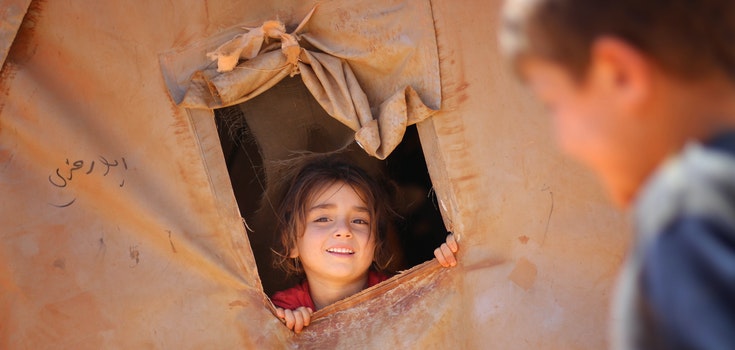
“Becoming a refugee is never a choice. But how we respond is.
So let us choose solidarity.
Let us choose courage. Let us choose humanity.” – UN Secretary-General António Guterres
Every June 20th, the world comes together for World Refugee Day. It isn’t just another date. It’s when we honor those real people who packed their lives into a bag: stories, hope, and this unbreakable will to rebuild.
This year’s theme, “Solidarity with Refugees,” goes beyond raising awareness. It’s about turning “we care” into “we act”: a direct call to transform empathy into tangible change. True solidarity means more than recognizing their struggle. It demands concrete action: policy reforms that protect rights, economic opportunities, restore independence, and communities welcoming refugees with dignity.
The Global Displacement Crisis: A World Uprooted
People forcibly displaced worldwide | 2015 – 2024


Source: United Nations High Commissioner for Refugees, UNHCR: Data and statistics,Global Trends 12 June 2025.
Right now, our world is facing a truly massive problem: more people are being forced to leave their homes than ever before. According to UNHCR’s Annual Global Trends Report, 122.1 million people have been driven from their homes as of April 2025. That’s 2.1 million more than last year alone, marking ten straight years of rising numbers with no end in sight. These aren’t just big numbers: each one is a real person whose life has been turned upside down by violence, or by the increasing chaos in places like Sudan, Myanmar, and Ukraine. It’s incredibly sad to know that Sudan has now actually passed Syria with over 14 million people forced to run for their lives.
It’s not just conflicts that are pushing people out. Climate change is making this crisis even worse. In many areas, war and political chaos are now colliding with extreme droughts and floods, making things much harder for communities that are already struggling to survive. Over the last ten years, climate disasters have forced around 220 million people to flee their homes. That’s like 60,000 people having to move every single day because of floods, storms, and others.
Global humanitarian needs are escalating rapidly, yet critical funding continues to fall short. UNHCR Global Report 2024 showed that they needed about $10.8 billion for their programs. But they only secured about $5.2 billion, which is less than half of what was needed. This drastic shortfall has serious consequences in places like Uganda, which now has the largest number of refugees in Africa, with 1.8 million people. They took in 60,000 new arrivals in just three months, which completely overwhelmed their already stretched resources and pushed rates of malnutrition to crisis levels. This emergency has gotten even worse because of big cuts in aid: a U.S. funding freeze and the UK slashing its aid budget from 0.58% to 0.3% of national income. These cuts have made it much harder for Uganda to even provide the basic necessities for refugees.
As humanitarian resources tighten, the role of NGOs becomes even more vital, demanding smart, strategic approaches to secure support and deliver real impact. Whether you’re a small refugee-led group or a well-established organization, competing for funding is tougher than ever. Here are a few tips that you need to know before submitting your next donor proposal.
1. Know your donor:
Before drafting your proposal, invest your time in getting to know the donor. Research their mission, review their latest strategy documents, and check their latest funded projects. Does their funding prioritize immediate humanitarian crises, such as rapid food distribution, emergency shelter, or medical aid? Or do they invest in sustainable solutions like education, mental health programs, economic inclusion, or long-term community resilience? It’s no secret: even the strongest projects won’t secure funding if it doesn’t align with the donor’s core mission. Your proposal must solve their priorities, not just advance your own goals. So draft your proposal according to the donor’s interests and priorities.
Suppose your refugee livelihood program supports small business training, and the donor prioritizes “empowering refugee women through sustainable model.” Then you should draft your proposal clearly to show how your training will promote women’s entrepreneurship and scalability, using the donor’s phrase and goals to make your proposal more compelling and increase your chances of winning.
2. Respect Storytelling Boundaries:
“Stories are very powerful, but how you tell them matters.” When sharing refugee experiences, avoid framing individuals as helpless victims. Instead, focus on their resilience and skills to show how they’re actively rebuilding lives and contributing to communities. Remember: authentic storytelling isn’t just about raising funds, it’s about restoring humanity. Also, always seek consent before sharing someone’s story.
For example, consider how the International Rescue Committee profiled Rehab, a Syrian refugee in Jordan. Rather than emphasizing past trauma, they highlighted her achievements. It showed how she used her sewing skills to build a small business in Jordan, which helps to feed her family while providing quality clothes to local customers. Though the story mentions hard times, it’s not centered on pity. Instead, it’s centered on a woman building her future stitch by stitch with her own hands and hard work. without showing her as a victim.


3. Don’t Just Describe – Demonstrate Impact:
Donors review countless proposals. Simply stating you “ran workshops” or “distributed aid” won’t capture their attention. What resonates? Showing how your work transforms lives. Be specific about how you help, who benefits, and what changed as a result of your work. Remember: Donors don’t fund tasks, they fund changed lives. Use data, stories to highlight the clear result or impact that you’re making through your work.
For example, instead of writing: “We trained refugee women in enhancing their business skills.”
Try: “Within 3 months of our vocational training program in Uganda, 7 in 10 women started small businesses or started working in an industry using their skills, making them strong, independent, and increasing their income by an average of 50%.”
Also, where possible, back it up with simple monitoring data or follow-up surveys to highlight your work’s impact.
4. Don’t Just List Numbers, Let Your Budget Tell a Story:
Donors don’t see spreadsheets, they see opportunities to change lives. So, transform cold numbers into tangible impact: Instead of listing “$15,000 for staff training,” write “$15,000 trains 20 local counselors to support 500 refugees, helping families find jobs, enroll children in school, and rebuild safety.” Your budget must prove your mission to increase your chances of winning. Also, always be transparent about your budget.
5. Plan for the long term:
Donors care about real, lasting change, not just quick fixes. They want to put their money where it makes a long-term difference. So when you pitch your project, don’t just talk about what you’ll do over a short period. Show how it fits into a bigger plan for real change down the road.
For example, if you’re offering a vocational training program, show funders how this training helps people find real jobs or start businesses that last. Explain how it connects to the local job market. Show them how you are there to solve problems for good, not just put on a band-aid. That’s how you build real trust and make funders much more likely to back you, not just for this project, but for the long term.
If you want to learn more about proposal writing skills or tips, explore our comprehensive resource guide, which contains practical strategies and annotated examples from successful proposals, providing actionable insights to help you learn and grow your skills.